

By - AVF Consultant
Canada Work Permit Without LMIA: What Options Are Available?
People, from countries really want to work in Canada. These are workers or young people who want a life and good career opportunities. People often wonder if it is possible to get a Canada work permit without going through the Labor Market Impact Assessment process.
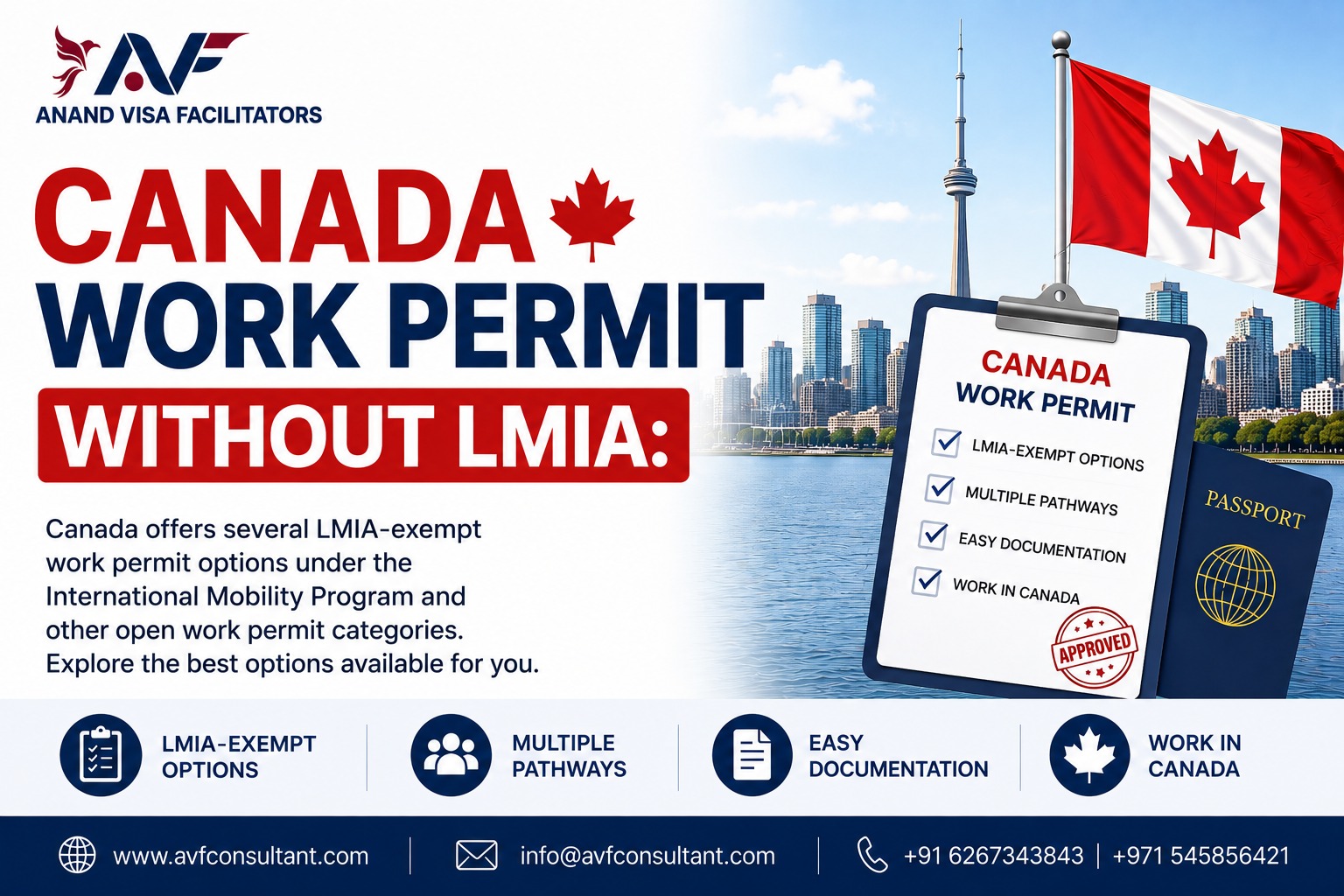
The answer to this question, about Canada work permits is yes. Only, in some cases. Canada offers ways to get a work permit where an employer does not have to get a Labour Market Impact Assessment. These ways are mostly part of the International Mobility Program and some open work permit types.
Still not getting an LMIA does not mean that anyone can work in Canada without any rules. You must meet conditions. Your situation matters the kind of job you have the company you work for your country of origin and the immigration program you are part of all play a role in whether you can get a work permit.
What Is An LMIA?
So you want to know about a Labour Market Impact Assessment. This is a thing that helps figure out if hiring someone from another country will be good or okay for the jobs market in Canada.
When a company in Canada wants to hire someone from outside the country they usually need to get an LMIA. Then the worker can apply for a permit to work in Canada.. There are some cases where the company does not need to get an LMIA.
These cases are meant to help Canada with its economy and with people getting along and with culture and, with countries.
What are the main options for getting a work permit that does not need a Labor Market Impact Assessment?
There are a ways to get a work permit that is exempt, from Labor Market Impact Assessment. The best way for you will depend on who you're what your situation is.
1. International Mobility Program
The International Mobility Program gives companies the chance to hire some workers from other countries without getting an LMIA.
Unlike the Temporary Foreign Worker Program, which usually needs an LMIA the IMP has categories that do not require an LMIA. These can include workers who're part of international agreements, workers who speak French and are not in Quebec some young people taking part in exchange programs and other groups that qualify.
For permits that are specific, to an employer and do not need an LMIA the employer has to send an offer of employment using the Employer Portal and pay the right employer compliance fee before the worker applies.
2. Francophone Mobility
The Francophone Mobility option is really important for French-speaking workers who want to get a job outside of Quebec.
Francophone Mobility is a choice for them.
These workers need to show that they can speak and understand French at a level.
They also need to have a job offer from an employer.
The employer has to send this job offer through the Employer Portal and use the process to get an exemption for the Labour Market Impact Assessment.
This option is very useful, for professionals who speak French and want to live and work outside of Quebec.
For people who have French skills Francophone Mobility is a great way to go.
It helps them to get a job outside of Quebec with Francophone Mobility.
3. International Experience Canada
People from countries can get a temporary work permit through International Experience Canada.
International Experience Canada is an option for young people who want to work in Canada.
They can get this permit through International Experience Canada.
The options are different depending on the country and the type of permit.
International Experience Canada has options like Working Holiday, Young Professionals and International Co-op.
International Experience Canada is a way to get a work permit without needing a Labour Market Impact Assessment, which's what Immigration, Refugees and Citizenship Canada says.
To be eligible for International Experience Canada people need to meet requirements.
The requirements for International Experience Canada are different for each country and each type of permit.
People who want to apply for International Experience Canada should check the requirements before they make any plans, for International Experience Canada.
4. Open Work Permits
So what is an open work permit? It is different from an employer- work permit. This is because an open work permit lets the person who has it work for employers who're eligible rather than just one employer.
To get a work permit you have to meet certain requirements. The Immigration Refugees and Citizenship Canada or IRCC says who can get one. For example some people who are applying for residence can get an open work permit. Some international graduates can also get one. Eligible family members and people in programs can get open work permits too.
So if you want a work permit you should first find out if you are eligible for an open work permit. You need to see if you fit into one of the categories for a work permit. Open work permits are not, for everyone so you have to check if you can get one.
5. International Agreements and Other Exemptions
Canada has various international agreements and specific exemption categories that may allow certain foreign nationals to obtain an LMIA-exempt work permit.
For example, some workers may qualify through free trade agreements, while certain intra-company transferees may qualify when they meet the relevant requirements. IRCC's LMIA-exempt categories are designed for specific situations rather than being a general alternative available to every job seeker.
What Documents Do I Need To Get
The things I need to give in depend, on the kind of work permit I am applying for. I may need to show documents like:
- Valid passport
- Employment offer or contract
- Proof of qualifications and work experience
- Employer compliance information, where applicable
- Proof of language ability, if required
- Educational documents
- Proof of relationship for eligible family members
- Other documents requested by IRCC
For employer-specific LMIA-exempt applications, the employer may need to submit an offer through the Employer Portal before the applicant submits the work permit application.
So you want to know if an LMIA-Exempt Work Permit can help you get Permanent Residence.
An LMIA-Exempt Work Permit and Permanent Residence are different ways to move to a new country.
Having an LMIA-exempt work permit does not automatically provide permanent residence. However, Canadian work experience may be relevant to certain economic immigration programs, depending on the applicant's circumstances and the requirements of the program.
This is why it is important to consider your long-term immigration plan before choosing a work permit pathway.
Why You Need Help From A Professional
immigration programs are really hard to figure out especially when you are trying to determine if a specific job and applicant can get an exemption from something called an LMIA.
A person who is experienced in immigration can help you understand what options are available to you and what you need to do to qualify. They can also help you with all the paperwork. Getting your application ready.
If your situation is a little unusual it is an idea to talk to someone who is an expert in visas or migration. They can help you figure out which program is the fit for you. If you want to work in Canada, a consultant who specializes in work permits can help you understand the difference between jobs that require an LMIA and jobs that do not.
You should not think that just because you get help from a professional you will definitely get approved. The people in charge of immigration, in Canada make the decision based on your application and the rules that apply to you.
Final Thoughts
So you can actually get a work permit in Canada without needing that Labor Market Impact Assessment, which's what the LMIA is. The thing about the work permit in Canada is that there are some cases where you do not need the LMIA to get it. You can get a work permit, in Canada without the LMIA.
It depends on meeting the requirements of a specific exemption or open work permit category. Options like the International Mobility Program, Francophone Mobility, International Experience Canada, open work permits and some international agreements can offer ways for people who qualify.
Before applying take the time to look at your job offer your qualifications, your nationality, your work experience and the immigration path you want to take. Picking the category from the start can help you put together a better and more suitable application.
Thinking about working in Canada? Look into your choices, with AVF Consultant. Get expert advice that fits your personal situation.